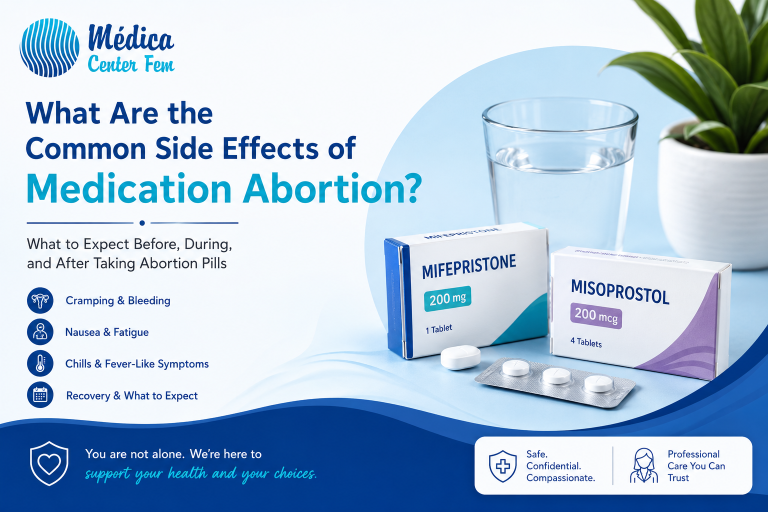
Medication abortion is a common option for ending an early pregnancy and typically involves taking two medications that work together to complete the process. While many people have questions about effectiveness, one of the biggest concerns is understanding what happens physically after taking abortion pills and whether symptoms are normal.
Experiencing cramping, bleeding, nausea, and temporary discomfort can be expected because the body is responding to the medications and expelling pregnancy tissue. Knowing what side effects are common and recognizing signs that may require medical attention can help reduce uncertainty and make the process easier to understand.
If you are new to the process, understanding the basics of abortion pills can provide additional context before learning about possible symptoms and recovery.
How Does Medication Abortion Work?
Medication abortion usually uses two medications:
- Mifepristone
- Misoprostol
Mifepristone blocks progesterone, the hormone needed to continue a pregnancy. Misoprostol then causes the uterus to contract and expel pregnancy tissue.
You can learn more about how Mifepristone and Misoprostol work together during the medication abortion process.
Most individuals begin experiencing symptoms shortly after taking misoprostol because that is when the uterus begins contracting.
Common Side Effects of Medication Abortion
Most side effects are temporary and happen because the body is actively responding to the medication. The severity and duration can vary from person to person.
Bleeding
Bleeding is one of the most common effects after taking abortion pills. In many cases, bleeding is heavier than a normal menstrual period.
Bleeding may include:
- Passing blood clots
- Heavy flow during the first several hours
- Spotting afterward
- Gradual reduction over several days or weeks
Heavy bleeding generally occurs when pregnancy tissue is being expelled and later becomes lighter.
Many people worry when they see blood clots, but passing clots can be a normal part of the process.
Cramping
Cramping is also extremely common. Since the uterus contracts to empty its contents, the intensity can sometimes feel stronger than normal menstrual cramps.
People describe cramping as:
- Mild discomfort
- Moderate menstrual-like cramps
- Strong pressure sensations
- Waves of pain
Cramping often begins within a few hours after taking misoprostol and can decrease significantly after pregnancy tissue passes.
Nausea
Medication abortion can temporarily affect the digestive system.
Some people experience:
- Upset stomach
- Loss of appetite
- Nausea
- Occasional vomiting
These symptoms usually improve within one or two days.
Diarrhea
Misoprostol can stimulate muscles in the digestive tract, which may cause temporary diarrhea.
Symptoms may include:
- Loose stools
- Abdominal discomfort
- Mild digestive upset
Hydration is important if this occurs.
Fatigue
The body undergoes physical changes during the process, making tiredness common.
You may experience:
- Low energy
- Sleepiness
- Temporary weakness
- General exhaustion
Rest and hydration can help support recovery.
Chills and Fever-Like Symptoms
Some individuals notice:
- Chills
- Sweating
- Mild fever sensations
- Feeling cold temporarily
These symptoms can occur for a short period after taking misoprostol.
Short-lasting fever symptoms can occur normally, but persistent fever should be discussed with a healthcare provider.
How Long Do Medication Abortion Side Effects Last?
General timelines may look like this:
First 24 hours
- Heavy bleeding may begin
- Cramping may become stronger
- Nausea and chills can occur
2–7 days
- Bleeding gradually becomes lighter
- Cramping decreases
- Energy levels begin improving
1–4 weeks
- Light spotting may continue
- Hormones gradually return toward pre-pregnancy levels
Understanding Recovery After Medication Abortion
Recovery is not only about physical symptoms but also taking care of overall well-being.
Helpful recovery steps include:
Rest When Needed
The body may need time to recover after cramping and bleeding.
Stay Hydrated
Fluids become especially important if nausea or diarrhea occurs.
Monitor Symptoms
Keep track of:
- Bleeding patterns
- Pain levels
- Fever symptoms
- Overall changes
Follow Recommended Care Instructions
Proper post-abortion care can support recovery and help answer questions that may arise after the process.
Frequently Asked Questions About Medication Abortion Side Effects
Is heavy bleeding after abortion pills normal?
Heavy bleeding can occur during medication abortion and is often part of the process of passing pregnancy tissue.
Can medication abortion cause nausea?
Yes. Temporary nausea can occur because of the medications used during the process.
How long does spotting last?
Some individuals may continue experiencing light spotting for several days or even a few weeks.
Does abortion cost vary by location?
Pricing may differ based on services, providers, and location. You can learn more about abortion price in Las Vegas and factors that may influence overall costs.
Understanding State Laws and Regulations
Laws regarding abortion access vary across different states.
You can also explore more information about:
- Texas abortion laws
- Texas abortion case and Supreme Court developments
- Las Vegas abortion laws
- Florida abortion laws
Final Thoughts
Medication abortion side effects can vary from person to person, but bleeding, cramping, nausea, fatigue, and temporary discomfort are among the most common experiences. Understanding what to expect can reduce uncertainty and help individuals feel more informed throughout the process.